

Propogating Nepenthes via rooted cuttings is one of the easiest methods. All Nepenthes develop vines which their leaves grow out from. Above each leaf is a node that has the ability to activate – essentially spliting off into its own vine.
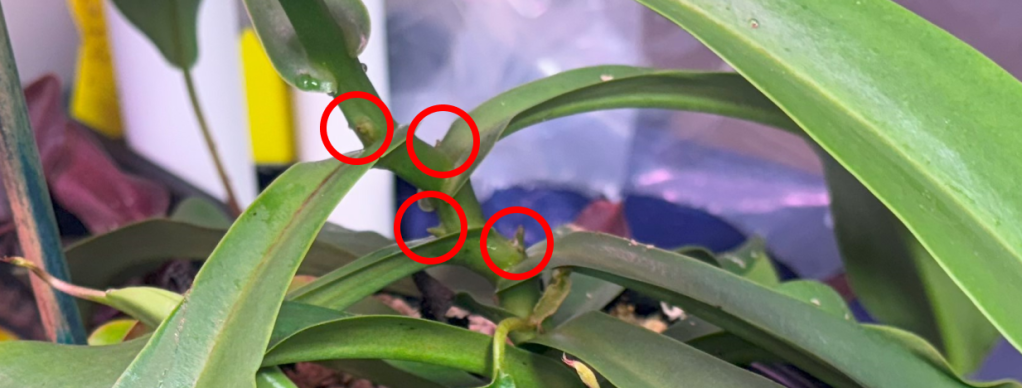
4 of the nodes on this Nepenthes spathulata x tobaica are circled above. Some species/hybrids present much less noticeable nodes, however they all have the same function.
By cutting a vining Nepenthes into sections that contain 1-3 leaves and nodes, then placing each section into a wet environment you can typically get a node to activate and the bottom of the stem cutting to grow roots. This process can take a few months and some cuttings may not have a node that activates.
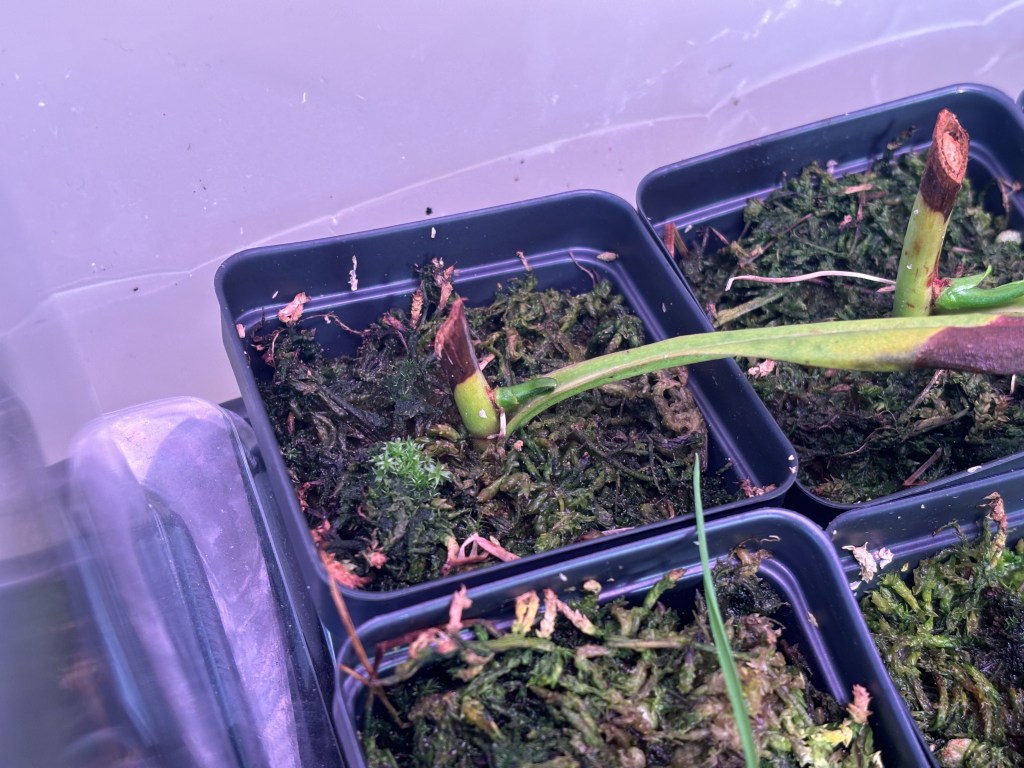
Pictured above are two single node cuttings of N. copelandii that were placed in pure sphagnum moss about 40 days ago and have each activated a node. It is highly likely that roots have begun to develop at the bottom of the main vine of each cutting, but checking at this stage would require removing the cuttign from the sphagnum moss substrate which would cause unecessary stress to the already fragile plant.
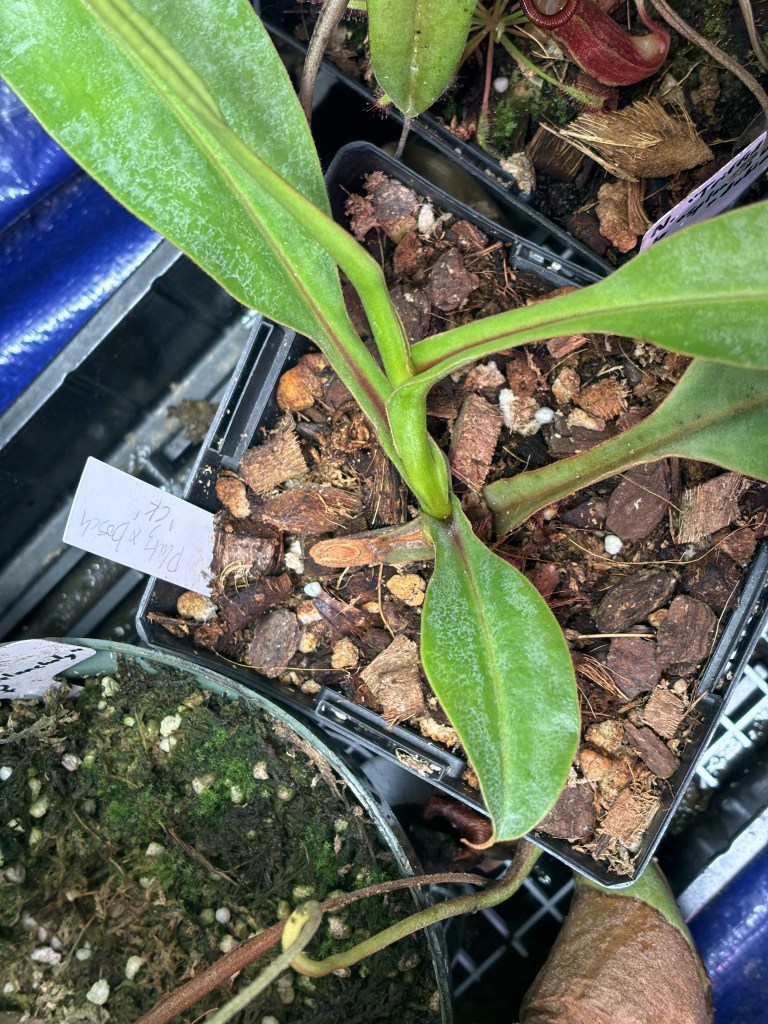
Pictured above is a rooted cutting of N. platychila x boschiana CK that activated a node and is now producing mature leaves. No pitchers have developed yet, but it is likely to start producing pitchers within a few weeks now that it is properly established. Note the original vine sticking out to the left which has now become woody.
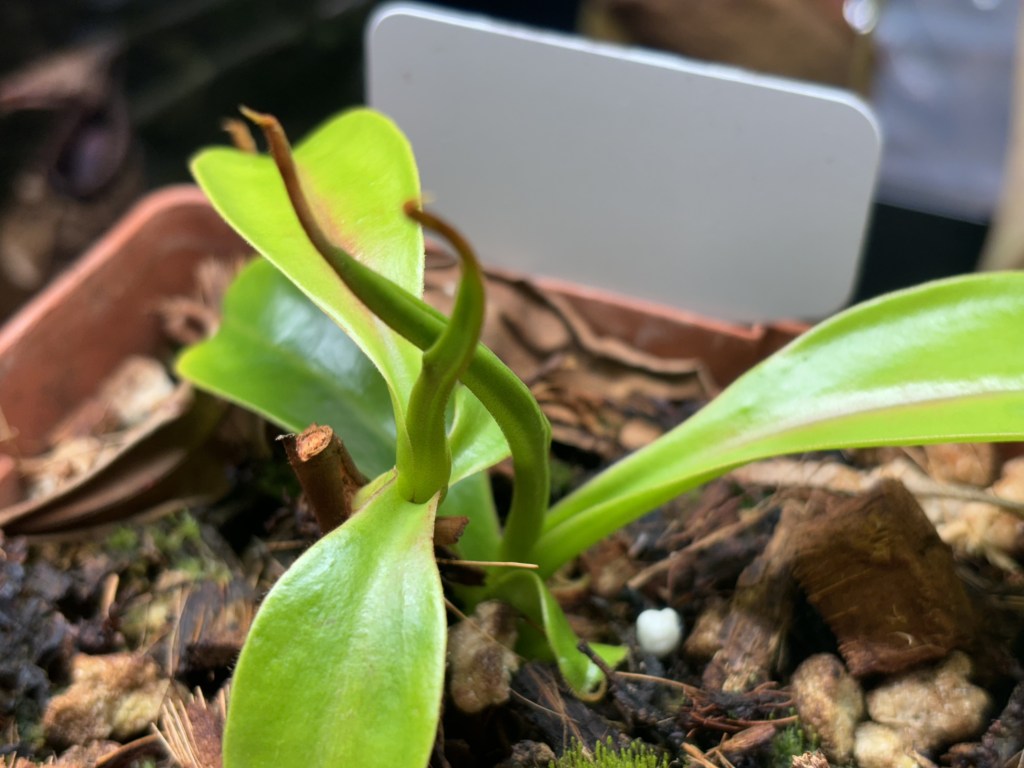
Pictured above are two basal growths on N. copelandii that activated from nodes on the plant’s main vine before it was cut to produce the cuttings shown two pictures above this one. It is common to wait until a main vine produces at least one basal before taking cuttings as this is an almost guaranteed way to preserve the plant in case none of the cuttings “strike”.
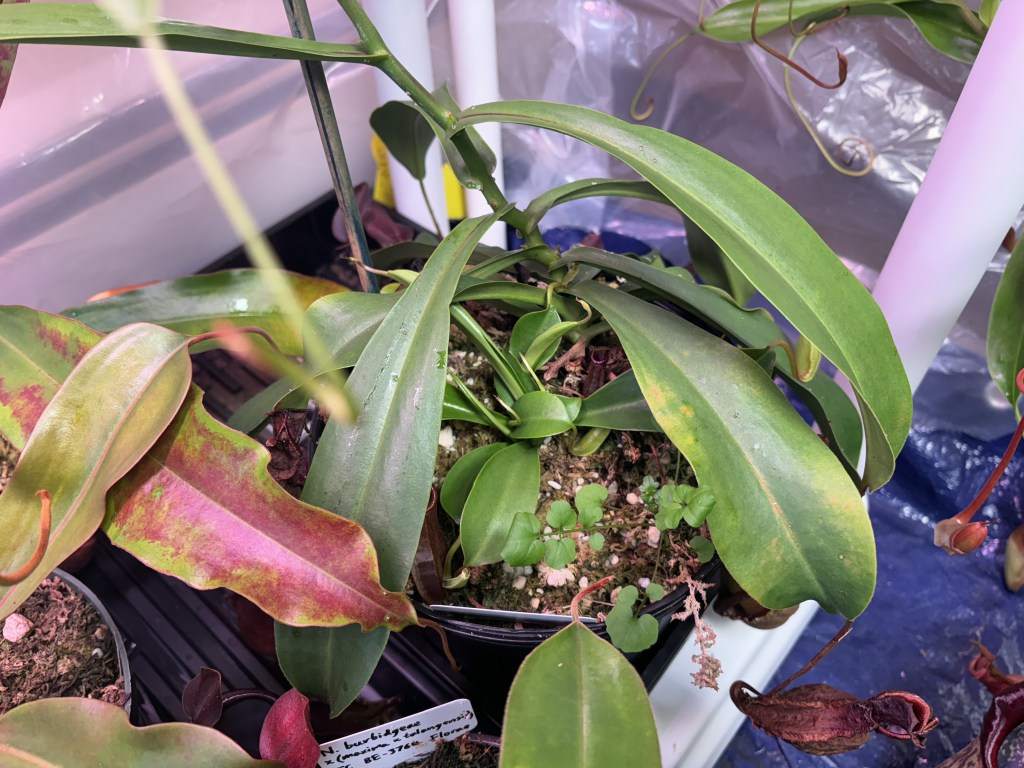
Note the 3 basals growing at the base of this N. spathulata x tobaica. While they are clustered together, it is easy to count them by counting the number of growth tips (thin leaves that have not yet fully unfurled), as each vine of a nepenthes will only have 1 growth tip at a time.
Basals can be rooted similar to cuttings and typically have a higher rate of success as they already have a healthy growth tip and do not need to activate a dormant node in order to continue growth.
Maintaining a moist substrate and high ambient humidity are crucial for the success of rooted cuttings. As they have no roots it is very difficult for cuttings to uptake water, and like almost all plants, Nepenthes release moisture into the air through structures called stomata located on the underside of their leaves. This proccess is referred to as transpiration. Without proper roots to replenish water in the cutting, transpiration can dehydrate a plant quickly. This is why high ambient humidity (80%+) is crucial to high strike rates. Cutting the leaves in half on rooted cuttings can also help reduce the dehydrating effect of transpiration and has relatively little impact on the cutting’s ability to activate a new node.
Rooted cuttings are typically denoted as “RC” or simply “Rooted Cutting” in the plant IDs on most sellers’ websites. Rooted cuttings are an exact clone of the plant they are taken from and so you can expect them to eventually grow the same looking pitchers provided your conditions are sufficient.
We always show pictures of the “parent” plant’s mature pitchers on rooted cuttings we sell so that customers know exactly what to expect from the plants.
Some very desireable clones of Nepenthes are only available as rooted cuttings, such as N. veitchii “Candy Dreams”. I recently saw a rooted cutting of this beautiful clone of veitchii for sale on eBay for a staggering $3,000 USD!
As N. veitchii “Candy Dreams” is a male plant and there is no female N. veitchii “Candy Dreams”, some nurseries have bred female veitchiis with “Candy Dreams” and sell the offspring, hoping that the highly desireable traits of the father pass on to the offspring. While these are often listed for over $100 they are a much cheaper alternative to dropping thousands on an actual “Candy Dreams”. However, none have resulted in offspring quite a phenomenal as “Candy Dreams” himself, though some have come close.
Read more about breeding nepenthes here.
 coopscarnivores.com